Sunday, September 8, 2024

Review Article: Finding Alternatives and/or following global trends for school leaders: Reflection of Educational Administration Management in Japan

Review Article: Finding Alternatives and/or following global trends for school leaders: Reflection of Educational Administration Management in Japan


The research article entitled “Finding Alternatives and/or following global trends for school leaders: Reflection of Educational Administration Management in Japan. It was written by the two authors Hiroki Suematsu, Tokyo Gakugie University, Tokyo, Japan, and Kemma Tsujino, Osaka City University, Osaka, Japan.

The research aims to learn if there is a certain gap between what school leaders say and what they actually think and do. And to answer their questions: how is a headteacher able to impact and affect the school? and what kind of relationships are there among various voices that are involved in the actual process to improve the school? Under or against the political mainstream, a “grass-rooted” dialogue between school leaders and researchers is conducted to find alternatives either or follow global trends. That is why the researchers define first what is a school leader. According to the research, the school leader is defined as the head teacher or the principal. Some researcher tends to think that school leadership is a kind of behavior (Hallinger et al., 1983). It includes the teachers and other staff, who are trying to bring about a positive movement to their school. Newman (2013) stated school leadership by pointing to universal leadership skills, practices, and professional knowledge as well as a range of contextual factors that describe leadership.

The ambiguity of the meaning of the school leader and the implication that will adhere to it cannot be underestimated. The concept or ideas of a school leader varies from place to place. It is because of the environment. The environment is one of the factors that assess the type of management that will be used, should it be a top-down approach or policy-led approach. Mincu (2022) stated that failing to recognize the role of leaders in quality and equitable schooling is unfortunate and must be redressed. Leadership is fundamentally about organized agency and collective vision, not managerialism since it is an organizational quality, not merely a positionality attribute. We cannot give the exact meaning or give the correct definition but rather we only give the best possible meaning. Lumby et al. (2009) said that our view in the relation to school leadership views the field of influences as a wider, not just contributing to the effectiveness of the organization, but also directly interacting with and contributing to the community.

The result of the research is based on formal and informal continuous interviews and observations for a period of time. All the data gathered were analyzed and simplified. The top-down instruction is often seen as suppressive. However, Team Asana (2021) stated that it eliminates confusion, reduces risk, and keeps initiatives organized. Most of the new employee was struggling at the beginning due to the diffident culture of having a school that has given more freedom than an institution that uses top-down approach management. The research stated that academic achievement was often simplified by test scores. The more the headteacher is familiar with the management of the school, the gap between the administration and the teachers will be lessened. We must remember that the administrator has the power to change the direction of the school and what kind of approach to use.

One way to understand the way of thinking of the teachers is to conduct a survey or a school evaluation. Love (2010) said that evaluation is being used to measure student progress, reform education systems, and enhance accountability for the outcomes.  Duran (2010) stated also that educational evaluations are intended to provide evidence-based arguments about whether educational outcomes can be improved based on the implementation of intervention strategies. That is why an administrator must be open-minded. Doney and Wegerif (2017) noted that open-mindedness could also be expressed as openness to others. Therefore, the administrator will be able to see and change what is needed in order to attain academic achievement.

The research indicated in the reflection on educational management how diffident conditions exist from region to region and the possible ways for the corresponding school management to be particularly context-based. As the one in power known as the school administrator, they have the ability to organize and intervene in the teachers or staff’s way instead of supporting them. The research noted how can we approach the reality of school management as it is extremely complex. According to the research, it is impossible to approach the reality of school management without looking at least from the following statements: First, the diverse intentions within the organization. Second, the various contributions outside the school. Third, a rotational system of the personnel. Fourth, a delicate balance of school management between sustainability and innovations. Fifth, a careful mutual understanding with educational administration. And Last, the sharing of insight into social change including its unpredictable elements.

            Looking for the best solution on how realistically school management can be described, there will be a remaining question of which direction the school should proceed. Every administrator has their ideals and principles meaning that they focused on what can benefit their schools or their community. As I said earlier, the state of the school defers from place to place. Administrator has their own will to improve the quality of education and services of the school. According to the research, even rapid global changes that affect society or the lives of the student will not appear spontaneously. That is why an analytic perspective towards educational administration or management is necessary for the development of education and that education will be able to catch up to adapt to the current time.


References

Hallinger, P., Murphy, J., Well, M., Mesa, R. P. and Mitman, A. (1983) “Identifying the Specific Practices, Behaviors for Principals”, NASSP Bulletin

Newman, M. (2013). Conceptualizations of School Leadership among High School Principals in Jamaica. Journal of International Education and Leadership. Vol. 3 Is. 3

Mincu, M. (2022). Why is school leadership key to transforming education? Structural and cultural assumptions for quality education in diverse contexts. Prospects 52, 231–242. 

Lumby, J., Walker, A., Bryant, M., Bush, T., & Björk, L. (2009). Research on leadership preparation in a global context. In M. Young, G. Crow, J. Murphy, & R. Ogawa (Eds.), Handbook of research on the education of school leaders (pp. 157–194). London: Routledge.

Team Asana. (2021). Top-down approach vs. bottom-up approach: What’s the difference? Asana. Retrieve from https://asana.com/resources/top-down-approach

Love, A.J. (2010). Understanding Approaches to evaluation. International Encyclopedias of Education 3rd Edition. 

Duran, R.P. (2010). Cultural Issues that can Affect the Validity of Educational EvaluationInternational Encyclopedias of Education 3rd Edition.  

Doney, J. and Wegerif, R. (2017). Measuring Open-Mindedness: An evaluation of the impact of our school dialogue programme on students’ open-mindedness and attitudes to others. Tony Blair Intitute for Global Change.

Review Article: The Leadership Enhancement in Education 4.0 School Administrators

 Review Article: The Leadership Enhancement in Education 4.0 School Administrators


The research article entitled “The Leadership Enhancement in Education 4.0 School Administrators”. It was written by the three authors, Kuljira Raksanakorn and Tuwanan Ratthananin-Anan from the Faculty of Education, North Bangkok University, Thailand, Supattarasak Khumsamart from the Roi Et Provincial Office of the Non-Formal and Informal Education, Thailand.

            The research article is all about the leadership enhancement of school administrators.  Thus, the research objectives are as follows; first, to study the component, second, to study the current situation and the desirable conditions, and lastly, to assess the need for enhancement of leadership of school administrators in education. In order to answer the questions, the researchers used a mixed method, which uses both quantitative and qualitative approaches using the instrument in a form of a questionnaire. They gathered the data using a sample of 15 school administrators and 365 teachers using stratified sampling. In order to analyze the data that they have collected the research used statistics using frequency, percentage, mean and standard deviation.

            According to the research article, the results are concluded based on the objectives. The research analysis for the first objective is that the components of the enhancement of the leadership of school administrators were identified as knowledge and abilities, leadership skills, academic leadership, morals and ethics, new aged skills, attribute, and performance.  According to Phimphon, Kowat, and Kanok-orn (2015), the significant indicators for success or failure of education outcome rest on the ability of school administrators to make the utmost use of their knowledge and experience and in provide the leadership to create a vision for change, and to support school staff in their development to meet the challenges of a changing world. The research said that the second objective result was at a moderate level. Considering that all level of leadership skills is in the moderation of the results of the analysis of the second objective stating that there is still room for improvements.

            The research is beneficial and gives an idea to check which area in the educational administration as an administrator to explore the weakness and strengths. Being aware of our limitations is very important. Talerngsr (2018) stated with anything related to self-improvement, sustainability is the key. Thus, constant evaluation is necessary for the development of the skills. Talerngsr (2018) further noted that knowing your weakness is just as important, “A strength is not simply something that you are good at. It is also something that makes you feel strong. But the definition of weakness is similar. You may well be good at an activity – or good enough – but it doesn’t make you feel strong, in fact, you feel weak.” This gives a chance to the individual to access the weak area of the administration. 

            The analysis of the result of the third objective stated that according to the research, the assessment of needs for the leadership enhancement of school administrators in Education revealed that overall, when considering each aspect by specifying levels of needs ranging from highest to the lowest level of needs, the results are as follows: 1) performance; 2) morals and ethics; 3) attributes; 4) new-age skills; 5) leadership skills; 6) knowledge and abilities; and 7) academic leadership. As a result, all those needs can be ranked in order of their significance as follows: 1) performance; 2) morals and ethics; 3) attributes; 4) new-age skills; 5) leadership skills; 6) knowledge and abilities; and 7) academic leadership. We can see that the lowest level of needs is performance. Gong (2021) noted that performance management is not only a set of formal management tools but also implies specific management ideas and concepts behind it, which requires a certain institutional environment to guarantee and support. While the highest level is academic leadership. According to Hamdoun (2021), he described that it is known that leadership is important to be applied not only for the whole organization but also on the personal level. Indeed (2022) further mentioned that academic leadership is when a teacher, professor, or other members of faculty at an academic institution led students to success. They may help students develop the skills and knowledge they need in their future careers and provide challenging opportunities to test and improve this knowledge.


References

Phomkoh, P., Tesaputa K., and Somprach, K. (2015). Program Development for Enhancing Creative Leadership among School Administrators in Local Government Organizations of Thailand. International Journal of Behavioral Science. 2015, Vol. 10, Issue 2, 79-93

Talerngsr, A. (2018). Developing Self-Awareness for Today’s Leader. Bangkok Post. Retrieve from https://www.bangkokpost.com/business/2071615/self-awareness-for-sustainable-business-leadership

Gong, F. (2021). Promoting the Innovative Development of Higher Education Performance Management Based on Internet +Technology. Journal of Physics: Conference Series

Hamdoun, A. (2021). Academic Leadership Commences by Self-Leadership. SHS Web of Conferences 111, 01001

 Indeed Editorial Team. (2022). What is Academic Leadership? (and How to be a Better Leader. Indeed. Retrieve from https://ca.indeed.com/career-advice/career-development/academic-leadership#:~:text=Academic%20leadership%20is%20when%20a,test%20and%20improve%20this%20knowledge.

Development plan for knowledge, skills, characteristics of nursing students using strategy and set indicators


Development plan for knowledge, skills, characteristics of nursing students using strategy and set indicators.

Development plan Enhancement of 21st Century Knowledge and Skills and Lifelong Learning Skills in Social and Professional Uses Strategies, Conceptualization of Learning, and Learning Outcomes as steps demonstrating 21st Century Skills Enhancement and Lifelong learning, both social and professional, according to the hierarchy of years to use as a guideline for determining learning outcomes. instructional design and a systematic evaluation of learning achievement at the subject level. and year level to achieve course objectives. The content in the general education category is determined to have learning content. Linking knowledge content in basic professional categories and professional categories contributing to the development of learners to have 21st century skills and lifelong learning skills requires content and course management guidelines. Fundamentals of Professional and Specialized Categories of Nursing both theory and practice to enhance nursing skills both in health care facilities and in the community. Support the development of primary care services, social care for the elderly new normal society and changes in digital technology, such as information technology in nursing Be a digital nursing and formulate professional introduction and basic concepts in nursing. It is about the nursing profession, etc., teaching and learning that emphasizes learning. By setting hours and clearly designing self-study activities in the course in order to promote learners' learning time management for maximum benefit, preparing seminars for teachers in educational institutions. and to develop knowledge and 21st century skills and lifelong learning. Develop a system to support teaching and learning and create an environment that is conducive to learning in the 21st century, and develop a learning management that promotes language competence and individual abilities. Evidences/indicators were defined as follows: There was a hierarchical learning concept ladder chart used as a conceptual framework for a systematic learning design. 10. General education subjects, 21st century skills development subjects, 2 basic professional subjects, and 2 sheet subjects with content to increase knowledge and skills in the 21st century and study skills. Lifelong knowledge both socially and professionally Number of 28 vocational subjects with activity design self-study for a specified number of hours and the satisfaction assessment results of graduate users towards graduate quality at the bachelor's degree.

Development plan development of nursing graduates for competency and characteristics of new breed of graduates to be able to work Upon completion of the 1st year in taking care of people with health problems in most of the country and ready for the development of primary care services and caring for the elderly in a new normal society and upon graduation from the course in addition to working as a professional nurse Can also perform a variety of tasks, such as being an elderly care trainer using strategy Identify key competencies of professional nurses to provide quality care to people in the politest situations of all age groups. Practical skills and activity levels that can be performed reliably (EPA) are defined as clear courses to be used as guidelines for designing learning activities. and measuring learners' learning outcomes by subject Integrate material content and design learning activities based on real conditions. Reduce the complexity of learning concepts and practicing skills in practical courses to increase nursing skills both in service facilities and communities in line with real situations that are most common health problems and ready for service development. Primary And caring for the elderly in a normal society, a new way by developing or adjusting as follows: and nursing quality improvement practical subjects. The contents of travel and nursing research are included in the nursing quality development course that emphasizes the learners to practice research and use the research process to improve the quality of nursing care. Set the description and scope of the subject content to be consistent with nursing and facilitate understanding in the following subjects: Pharmacology and nursing practice. law and ethics in health and nursing; leadership, management and nursing quality development; Practicing health management in primary care and in a health setting. Basic nursing practice visa for the care of chronically dependent patients and basic nursing practice subjects in acute and critical stages. Introduction to nursing practice Anatomy and Physiology and develop the competencies of nursing graduates to be ready to take care of the elderly in a new normal society by organizing educational programs in the first year to provide students with basic knowledge and basic skills necessary for taking care of the elderly and chronically ill patients who need long-term care. and activities to enhance skills as trainers for elderly caregivers who need long-term care in the course Leadership and Nursing Management Evidences and indicators were determined, namely, the number of subjects that determined practical skills and level of activity that could be performed reliably (EPA), 22 subjects, the number of subjects whose subject matter was determined in accordance with nursing and conducive to learning understanding. To educate and develop graduates to be able to take care of the people with most health problems in the country and ready for the development of primary care services. and caring for the elderly in a normal society, a new normal, 9 subjects.

Development plan develop students' resilience to have leadership in nursing. have competence in nursing management research or innovation to improve the quality of nursing care Monitoring and evaluating health management outcomes in primary care and in clinical settings  using strategy Design a course with leadership development and health management at the primary care level and in a medical setting to give students the opportunity to practice to increase leadership competencies, nursing management strategies, and to design innovations or research to improve quality. Nursing Proposes a seminar to prepare teachers to develop knowledge, understanding, and competency in health management at the primary care level and in clinical settings. Design leadership skills development activities throughout the curriculum that are consistent with the teaching and learning activities in the curriculum by defining leadership skills and development activities for all levels, years that are linked to represent the accumulation of experience and leadership development results according to continuous year hierarchy starting from basic skills for working with others in social development, working as a team and leading group activities with external agencies. Teamwork in patient care Leadership Development A generation of students in coaching juniors with teachers as supervision. and leadership of the nursing team, management and development of nursing quality, designing clinical solutions. Designing activities throughout the curriculum to develop students to be learners and design innovations in nursing, starting from organizing learning experiences in the first year of general education subjects to develop skills using numbers or statistics in analytical thinking and continue to increase skills in using basic technology in research flat thinking innovate and developing analytical thinking skills with creative nursing design nursing according to the context of individual, family, and community service recipients in all nursing practice courses by organizing learning activities in the form of Inquiry based learning, Case study, and Project learning, etc., by defining evidence and indicators, i.e., the output from the course. Practice health management in primary care and in a healthcare setting. and a list of evidence/indicators for nursing quality development Number of instructors to develop knowledge and competency in health management at the primary care level and in a hospital at least 1 person before the course commences. The number of professional groups in every subject group (6 subject groups) has developed the leadership burden. and number of development plans Leadership skills by class throughout the curriculum 1 plan Number of subjects 17 Courses that develop researcher skills design innovation in council and the number of developmental plans for researcher development and innovation design 1 program provides content that develops students to understand about mathematics in daily life and have skills in Design Thinking and Creative Entrepreneurs. The subject matter on epidemiology is to be studied together with the subject matter of applied statistics. Designing a digital nursing course.

Development plan Develop learners' competence to take into account the rights of recipients using strategy Design instructional arrangements to increase nursing practice skills in skill laboratories, simulation laboratories, or use simulated patients. (Standardized patient) along with practicing analytical thinking at the situation to understand the problem and Guidelines for recording decisions truly solve the problem Thinking and practical skills are developed until they are confident and ready. Then practice in real situation until able to perform essential nursing by oneself correctly and patients are safe. Evidences and indicators were defined, i.e., designing instructional management for skills training in second memory situations; or use a simulated patient.

A certificate certifies the competencies of nursing students upon graduation.


A certificate certifies the competencies of nursing students upon graduation.

"Competency" is a behavior that demonstrates a person's ability to apply knowledge and skills in work, life, and problem-solving. Professor David McClelland of Harvard University found that competency is a trait that can predict success at work. Works better than intelligence competency should be the desired result of learning. because it is a practical level ability in life which directly affects the quality of life

Narong wit Saen thong (2003: 27) Competence means the ability or performance of the person holding the job position at that job needs the word competency. Only the behavior, but will Looking deeply at their beliefs, attitudes, and their deep character, therefore, competence is the knowledge, skills, and behaviors necessary for a person's work to achieve higher than general standards. which consists of 3 main components as follows.

1. Knowledge is what the organization wants to "know", such as knowledge and understanding. about government regulations that are implemented in the organization.

               2. Skill is what the organization wants to "do", such as technology use skills, which are Skills that must be practiced until proficiency is achieved before being put into use.

3. Desirable behaviors (Attributes) are what the organization wants it to "be", such as curiosity, honesty and commitment to success.

"Competency" or "capability" can be divided according to the purpose of making use of 2 groups: competency according to the British approach, which aims to provide certificates to accredit employees or personnel. It is determined from the performance standards that can be accepted for that job and profession. Competency in concepts is job-specific and professionally defined. As for the competencies according to the American approach, there will be objectives for personnel development. Determined from the behavior of people with good performance. The development of this personnel must be in accordance with the way the organization wants to be.

Solving the problems of education and advancing the development of education is a priority. With the performance-based curriculum (Competency-Based Curriculum) is consistent with the PISA report that has proposed that “From the assessment knowledge and skills of learners found that A learner's success in life depends on his competency level. ...in the modern world Person performance becomes more complex. It is not just a predetermined set of skills” (Independent Commission for Educational Reform. M.P.P.: Online). Independent Committee for education reform, conducting research to find ways and possibilities of curriculum arrangements and Competency-Based Education in Thailand consists of organizing competency-based courses. Competency-Based Curriculum: CBC Competency-Based Instruction: CBI Competency-Based Assessment: CBA.

Knowledge of Competency-Based Curriculum and Assessment.

Competency-Based Curriculum Concepts (Competency-Based Approach).

Competence means the ability to perform. (Performance) under conditions by using tools, materials, equipment specified. To meet standards (Standard) according to performance criteria (Performance Criteria) and have evidence of performance (Evidence) to evaluate and verify.

     The competency-based curriculum therefore mainly depends on the abilities of the learners. The design of the curriculum based on this concept will determine the competency criteria that the learners should comply with. got a course called the "Proficiency Criteria Course" is designed to ensure that graduates of a certain level have the skills and abilities in various areas. As desired, it is a curriculum that does not focus on knowledge or subject content that may change over time. It focuses on developing skills, abilities, attitudes and values. which will be beneficial to the daily life and the future of future learners This curriculum is structured to demonstrate competency criteria in the areas that students need to perform at each level of education and at each grade level. Skills and abilities are defined as continuity. By using the skills and abilities available at each level as a basis for increasing skills and abilities to the next level (Prof. Dr. Damrong Buasri: 1992).

The origin of the competency-based curriculum.

      The competency-based curriculum has been in use since 1970 in the United States. It is commonly used in organizing training courses. (Competency-based Training) such as the United States, Canada, England, Korea, Australia to control the quality of personnel in various professions to increase competition with international countries such as Australia. The National Training Board sets the national competency standards. Policies and guidelines for training operations with the expectation of what the participants will be able to do (Performance) at the end of the course, such as English language training about various careers such as food, hospitality, tourism of TAFE Australia. Organized Competency Based Training in English Language Teaching and improved performance standards of various occupations up to the present including comparing knowledge and experience.

Currently, various educational institutions in many countries have adopted Competency Based Training guidelines for organizing educational curriculum at different levels as a Competency Based Curriculum, which is accepted by the setter. policy and curriculum leaders of a wide range of countries.

Advantages of organizing a competency-based teaching curriculum.

Clearly define the learning outcomes of what the learners can do at the end of the course (Course Outcomes /Performance Outcomes).

Use competency standards as a framework for curriculum development, content determination, instructional planning and assessment. Link teaching to assessments and qualifications.

There are performance criteria (Performance Criteria) to be used to evaluate the course of the learners.

Competency Standards.

Performance standards Competency Standards reflect the specification of the knowledge and skill and the application of that knowledge and skill to the standard of performance required in employment).

Elements of Performance Standards.

In working in a career will determine the competencies expected that the learner will be able to perform, consisting of

Unit of competence (Unit of Competence / Competency) is a broad area (Broad Area) of a job (Job) in a profession that learners have to perform using knowledge and skills or may include attitudes.

Element of Competence is a sub-task that is composed under a task in a unit of competency.

Performance Criteria are sub-tasks under the Learning Outcomes that learners are expected to be able to perform upon completion of the course.

Conditions/Range of Variables Actions under specified conditions may include materials, tools, or equipment that are assigned (or not used) to provide the performance. Perform the task successfully.

When the performance standard framework organization of teaching courses Content assignments and instructional activities will be built within the framework of established competency standards and will be linked to measurement and evaluation. Which may be called Competency Test.

Delivery Strategies There are many methods as follows:

Use Audio-Visual Materials.

Brainstorming.

Case Study.

Cooperative work Experience.

Demonstration.

Discussion.

Repetitive practice (Drill).

Study outside the field (Field Trip).

Group Work.

Invite speakers to give lectures (Guest Speaker).

Modules/learning Packages.

Lectures.

Open Lab Sequences

Panel Discussions

Projects, Enterprise Papers, Prototypes, Research Projects, Models

Questions and Answers

Review/ do additional activities (Review/ Reinforcement)

Role Playing

Simulation Games

Text or Reference Assessment


Competency Based Assessment.

    Assessment is the collection of evidence of learning outcomes that learners have reached the required level or level in the standard or the learning outcomes specified in the unit of competency. Sub-competencies and indicators to determine whether the learners have achieved the required competencies or not. Assessment of competency-based curriculum arrangements should be carried out in conjunction with the teaching and learning by measuring both knowledge and skills and their application.

     Performance-based assessment It is not better or different from traditional or other assessment methods, but competency-based assessments focus on the competencies required in professional training or education. Performance Based Assessment focuses on learning and practice processes. Which usually evaluates skills in 4 areas, namely.

1. Skills according to tasks (Task Skills) The ability to perform tasks for each piece.

2. Task Management Skills The ability to deal with tasks and activities that must be performed under that task.

3. Skills for anticipating obstacles and problems that may arise (Contingency Skills). Skill assessment is well used by simulating situations.

4. Role-based skills and responsible work and environment (Job/Role Environment) including working with others.

Performance-Based Evaluation Methods.

• Emphasis on the learning process and continuous assessment with the emphasis on formative assessment to monitor progress. Diagnose weaknesses The strengths of the learners provide feedback and also evaluate the teaching and learning activities of the teachers. At the same time, a summative assessment is required to measure and judge the end of learning process at the end of the course.

• Use Criterion Referenced to measure the performance of individual learners so that learners can develop their potential according to their abilities without having to compare with others and make group judgments.

• Assess critical outcomes first because of the learning/practice outcomes of all competencies. are not equally important Some competencies may be more important than others. Where teachers need to set limits on learning and assessment.

• Integrates relevant competencies, not assessed separately by competency units or sub competencies. Apart, although the competency standard framework defines a separate performance unit Sub-competencies and indicators do not mean that instructors are required to teach or evaluate each competency separately because in organizing teaching content, each unit may involve different competencies that are related or continually used. which include a variety of

               1. Observation, checklist

               2. Demonstration and questioning (Demonstration and questioning)

3. Tests and subjective examinations (Pen and Paper Test and essays) which are used to assess knowledge.

               4. Oral Test

               5.Projects

               6. Scenario (Simulations)

               7. Portfolios

 8. Assessment using computers (Computer-based assessment) as a tool to create Quizzes and results can be saved.

data source...

Knowledge of competency-based courses and assessments (Competency-Based Curriculum and Assessment) By Suchitra Pathumlangkar Study supervisors with special expertise Bureau of Vocational Education and Professional Standards.

The Importance of Participatory Management in Education


The Importance of Participatory Management in Education


1. What is participatory management?

Educational management is the process of utilizing available resources in such a way to promote efficiently and effectively in the development of human qualities (Mishra, 2008). In order to achieve an educational institution's objectives, management of education refers to the actual actions used to make sure the educational system functions properly. Managing a school is making sure that everything runs well within the boundaries of the institution. The term "educational management" describes the managerial procedure through which the actions of individuals within the educational system are coordinated, organized, managed, directed, and monitored in order to achieve and realize educational goals and objectives.

Participatory management is a leadership process that involves consultation with subordinates and a serious consideration of their opinions before making decisions. This approach leads to a reduction in the power differential between superiors and subordinates. Making sure that every individual working for an organization has the opportunity to contribute to organizational decision-making is known as participatory management. All organizational levels can benefit from a participative management approach.

The accomplishment of the organization's objectives depends on the involvement of all the members in the administration of educational institutions. The level of effort each member puts into his/her work will depend on how much they have to involve in various programs and activities, and their goals will be based on their efficacy and efficiency. Participatory management fosters a sense of belonging through fostering a sense of ownership inside the organization, which inspires workers to become more productive in order to meet their objectives. With the sense of belonging in a collaborative team working towards achieving a common goal, employees have higher self-worth and innovative accomplishment by contributing to the operation of organizational decisions.

It has long been recognized that one of the key components in the drive for better schools is the use of participatory management. Researchers frequently mention school-level criteria when describing effective schools, which include collaborative planning and collegial work, parental and community involvement (Creemers, 1994; Edmonds, 1979; Joyce, 1991; Marzano, 2003; Purkey & Smith, 1983). In order to increase school effectiveness and efficiency, participatory school management has long been identified as a major characteristic. Given this crucial function of participatory school management, an assessment of its adoption status and effects on academic achievement is necessary. According to several studies, participatory management is associated with increased productivity and organizational change.  


Figure 1: Diagram of Participative Management


2. Participatory Management Vs Non-Participatory Management

Non-participatory management is a management approach in which one individual makes all the decisions and solicits very little input from the rest of the organization. Autocratic or authoritative leaders make judgments based only on their personal convictions and do not consult anybody else for suggestions or counsel. It tends to produce extremely strict and highly organized environments and hinder innovation and outside-the-box thinking. On the contrary, the concept of "participative" leadership is based on the belief that a leader's primary concern is promoting participatory involvement. In practice, participative leadership has positive effects on the cohesion and work load of personnel involved, as well as on the effectiveness of a school unit. In addition, it encourages the involvement of teachers in the school's mission, which has positive effects on the school's overall performance.

One of the most significant ingredients to start with participatory management is participative decision making. In education, participatory decision making is based on the idea that active involvement of teachers, parents, or community members in school decisions will lead to improve school performance. (Lunenburg & Ornstein, 2008). Although the decision-making process may be slow, active participation and involvement in decision making encourages prioritization of investment within the contexts of the school and people involved. School management team is to be composed of representatives from various stakeholder groups (Cheong Cheng & Ming Cheung, 2003). Instead of making the decision unilaterally, participatory decision making, also referred to as shared, collaborative, or group decision making, focuses on decision processes that involve others. In opposition, non-participatory management involves centralized decision making that comes from the top positions of the organization. Since group members are not given the opportunity to make important decisions, decisive contribution from group members is minimal to nonexistent. Decision-making process is fast and fixed because it does not go through all levels.


Figure 2: Participatory Management Vs Non-Participatory Management


Participatory management is a progressive system of management which is dynamic, flexible and people-oriented. In participatory management, since decisions emerge from all individuals within the organization, they all identify their own indicators of success and goals with their self-motivation. It is innovative in nature, promoting creative and experimental ideas, based on sharing and learning from other’s experience. The whole process of participatory management is also proactive by taking precautionary measures before the commencement of factors and problems. There is a multi-dimensional communication system, providing freedom and dignity to each member. As all the employers work with the leader, the success of the leader depends on the cooperation of all concerned, meanwhile, job satisfaction is guaranteed for the whole group (McMillan, 2013).   

On the other hand, non-participatory management is a traditional system of management which is static, rigid, autocratic and organization-oriented. It only involves decision from the top level by the leader or manager, sometimes even by outsiders. Since there is no sharing of experience, the employees or members have to accept the decision of the power holder with the lack of creativity, innovation and positive thinking. There is just a pre-determined indicator of success, goals and motivation that is mainly directed by the manager. The success of management depends upon the ability and experiences of the manager to direct others. Non-participatory management emphasizes orders and disciplines with the unidimensional communication system. The absence of freedom and self-directed involvement create job unsatisfaction (McMillan, 2013).

3. Why is educational participatory management important in the 21st century?

In order to make educational improvements, educators have been introducing new innovations in the field of educational management. These innovations help to encourage decentralization and the implementation of collaborative school governance. (Anderson, 1998; Chan & Sheung Chui, 1997; Walker and Dimmock, 2000)

In the 21st century, decentralization-autonomy has had a great impact on the opening of the community's freedom to plan and carry out education in accordance with their own needs. Community-based education is one of the initiatives. As a result, managing education in decentralized strategies and allowing for as much community involvement as feasible is essential (Matsuhu, 2003). According to several researches, an approach to education known as "community-based education" is one that is founded on the values of "community, by community, and for community." Every educational program in this setting must involve the community actively and encourage continuous participation. Community participation is an aspect of the collaborative process of community-based education.

The skills that are in demand and will be rewarded in the 21st century are Critical Thinking & Problem Solving, Communication, Collaboration, Citizenship (global and local) and Creativity & Innovation. It is the participatory involvement that can sharpen and broaden each and every individual’s 21st century skills development. The success of an educational organization or institution depends on the effective management of its personnel and resources. To achieve this, the people who are affected by school decisions and progress, must be involved in making those decisions, and in finding out ways of problems solving. Under participatory school management, collaboration will definitely work well through multi-dimensional channels of communication in the school, and every member will be cooperating to share their innovative and creative ideas and experiences when the opportunities are given.

According to findings of several researches, involving educators and other interested parties in decision-making produces beneficial outcomes. Employee participation in decision-making and implementation has a favorable impact on their motivation, self-esteem, and morale. In addition, experts assert that because concerns are thoroughly explored through open communication among participants in participatory setups, better solutions come out, and better outcomes and improved efficiency are attained.

Employees will hold the key to an organization's growth and success in the 21st century. Researchers stated that employees are beginning to demand more from their employers. They desire greater participation in decision-making and teamwork (Owens, 2001; Wood, Chapman, Fromholtz, Wallace, & Zeffane, 2004). Participatory management with a focus on employee growth, entails more than simply forming groupings of people. Along with getting them interested in group activities, the people' abilities are also being improved, and thus participation depends on the persons' mental involvement rather than their physical presence (Muhs, 1982). To be effective and productive, educational organizations need to make sure that the goals of the organization and the goals of their administrators, teachers and staff are aligned. This means that individuals from different levels feel comfortable taking on responsibility, being creative, and being involved in their work. This is critical for all the participants to be able to reach their own goals, which in turn helps the organization achieve its goals.

In the age of globalization, the world is getting more and more connected and integrated. The concept of connectivity and interrelationships with the community as well as other different sectors is a key impediment that highlights the long-term success and continuity of a school. Participative management approach, with the current trend towards globalization, greatly affects in achieving sustainable goals. An impact of participative management worth noting is that participants often feel a feeling of ownership for change initiatives and subsequently offer more support to achieve the objectives of such efforts. In addition to participative methods, raising trust levels within the school community boosts productivity and educational outcomes. Obtaining a competitive benefit, as evidenced by high academic attainment and school enrollment, is the ultimate goal of participative management. Participatory management reduces the ease with which head teachers may influence other stakeholders, gives teachers a sense of ownership over their own working life, balances power disparities, and makes more resources accessible to schools.

4. Conclusions

Schools and educational systems today can serve as the foundation for advancing to a participative management strategy to meet quality criteria by considering the views and concerns of all the parts and stakeholders in school administrations. School management teams can be formed to promote participatory leadership by involving the people who will be affected by the decisions. Participatory school administration can be promoted through reform initiatives across the education sector globally. The foundation of these reform projects is the idea that involvement from parents, teachers, and students may help bring about the desired change in education. From recognizing requirements to designing and putting plans into action, stakeholders are expected to be actively involved in every step of the planning process. Stakeholders must also monitor and assess how well the plans are progressing. The best way to overcome the obstacles in school management is to promote collaborative strategic management and planning. Schools must employ participatory strategic management to ensure accountability and openness in the allocation and use of these resources.

The motto “Education is for all” has been applied and practiced as a worldwide trend in order to provide all individuals with the opportunities for being able to learn. It is essential that every citizen in every society has access to education programs in which his/her learning can take place. It must be a lifelong education for all people. Additionally, with the lifelong education process, educational management comes along together. Educational management is to be based on the idea that active involvement of teachers, parents, or community members in school decisions and strategies will lead to improve school performance by continuously developing the content and learning process. 

Therefore, if “Education is for all,” it also must be “All for Education,” meaning that the whole community from different sectors is responsible for educational management, it is essential for all to be actively involved in every step. Participatory action plays a significant role to conduct a public opinion for designing plans. Through collaborative approach with all stakeholders, curriculums and strategic plans are to be modified and updated by integrating the different influencing factors. Undoubtedly, such kind of collaboration is participatory management that will definitely work to improve educational management system for the society. 


References

Anderson, G. L. (1998). Toward Authentic Participation: Deconstructing the Discourses of Participatory Reforms in Education. American Educational Research Journal, 35(4), 571–603. https://doi.org/10.3102/00028312035004571

Chan, B. Y. M., & Sheung Chui, H. (1997). Parental participation in school councils in Victoria, Australia. International Journal of Educational Management, 11(3), 102–110. https://doi.org/10.1108/09513549710163998

Cheong Cheng, Y., & Ming Cheung, W. (2003). Profiles of multi‐level self‐management in schools. International Journal of Educational Management, 17(3), 100–115. https://doi.org/10.1108/09513540310467796

Creemers, B. (1994). The History, Value and Purpose of School Effectiveness Studies. Retrieved January 11, 2023, from www.semanticscholar.org website: https://www.semanticscholar.org/paper/The-History%2C-Value-and-Purpose-of-School-Studies-Creemers/24264b7dc2954988355a5b1c82899d3ba55d38f2

Edmonds, R. (1979). Effective Schools for the Urban Poor. Educational Leadership,

37, 15-24.

Joyce, B. (1991). The Doors to School Improvement. Educational Leadership, 48(8), 59–62. Retrieved from https://www.semanticscholar.org/paper/The-Doors-to-School-Improvement.-Joyce/c6b589a7cf0042ce4f35549f34c323bb38ad3ade

Lunenburg, F. C. (2012). Educational administration : concepts and practices. Belmont, Ca: Wadsworth.

Lunenburg, F. C., & Ornstein, A. O. (2008). Educational Administration: Concepts and Practices. Belmont: CA: Wadswoth/Cengage.

Marzano, R. J. (2003). What Works in Schools: Translating Research into Action. In ERIC. Association for Supervision and Curriculum Development (ASCD), 1703 N. Retrieved from https://eric.ed.gov/?id=ED474629

Matsuhu. (2003). Menata ulang pemikiran sistem pendidikan nasional dalam abad 21. Safiria Insania Press.

McMillan, A. (2013). Participative Management - organization, levels, style, manager, company, business. Retrieved from Referenceforbusiness.com website: https://www.referenceforbusiness.com/management/Or-Pr/Participative-Management.html

Mishra, R. C. (2008). Encyclopedia of Educational Administration: Theory of Educational Administration (Vol. iii). New Delhi: A.P.N Publishing Cooperation.

Muhs, W. F. (1982). Worker Participation in the Progressive Era: An Assessment by Harrington Emerson. Academy of Management Review, 7(1), 99–102. https://doi.org/10.5465/amr.1982.4285481

Owens, R. G. (2001). Organizational Behavior in Education. Allyn & Bacon.

Purkey, S. C., & Smith, M. S. (1983). Effective Schools: A Review. The Elementary School Journal, 83(4), 427–452. https://doi.org/10.1086/461325

Walker, A., & Dimmock, C. (2000). Mapping the Way Ahead: Leading educational leadership into the globalised world. School Leadership & Management, 20(2), 227–233. https://doi.org/10.1080/13632430050011443

Wood, J. M. (J. M. ), Chapman, J. A., Fromholtz, M., Wallace, J. (J. P. ), & Zeffane, R. (2004). Organisational Behaviour: a Global Perspective (3rd ed.). Milton, Qld: John Wiley & Sons.

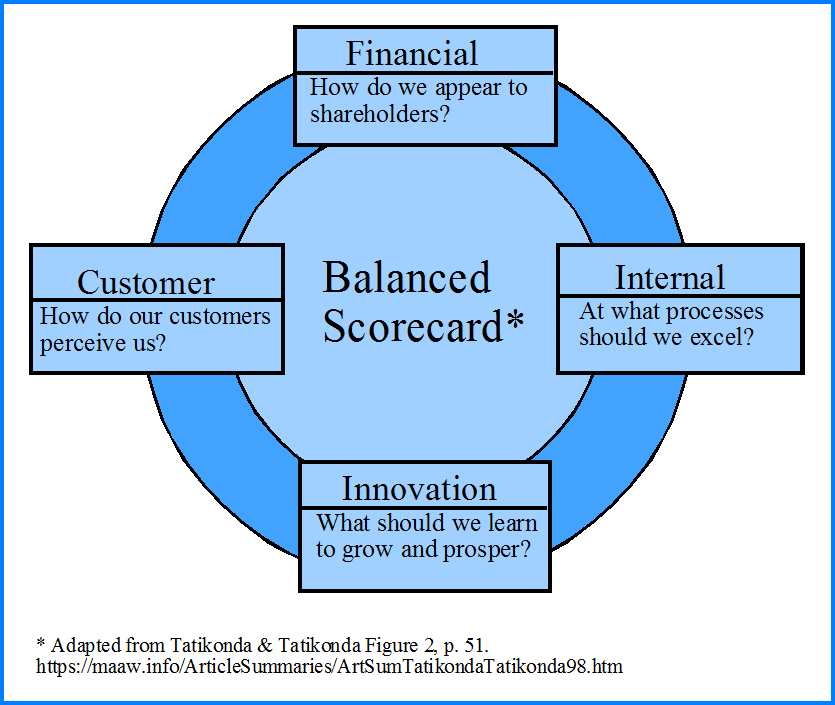
The Balanced Scorecard; Analytical View

The Balanced Scorecard is a Management System developed by  Prof. Robert S. Kaplan and Dr. David P. Norton of Harvard Business School in 199...